Looking beyond braces for musculoskeletal injury (MSI) prevention
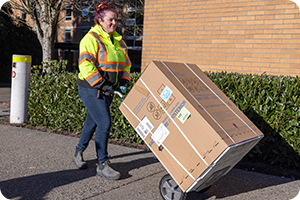
Workers who are constantly required to bend forward to retrieve items from lower shelves or floor level may feel that a back belt could help to support their back from a musculoskeletal injury (MSI). A worker who is using a wrist brace may be wearing it for highly repetitive work and work that requires their wrist to constantly move outside of a neutral posture.
If workers are observed wearing wrist or back belts, there is an opportunity to ask questions and take a closer look at their work activities to understand why they feel the need to use these braces.
It’s time to examine the task to understand why the work requires these movements.
Identifying risk of MSI
When looking at work tasks, you should consider what risks they pose and how those risks can be eliminated or reduced. Your first steps should:
- Identify where, how, and why MSIs are occurring.
- Assess the degree of risk by considering the magnitude, frequency, and duration of exposure to risk factors such as force, repetition, and awkward or sustained postures.
- Support worker education on the risk factors and signs and symptoms of MSI.
- Encourage early reporting of signs and symptoms of MSI.
Once you know the risks, you must eliminate them and, if that is not practicable, minimize the risk of MSIs to workers. This means improving workstation design, workplace layout, work rate, tools and equipment, and the organization of the work.
Read more
To learn more about workplace controls, risk assessments, and the role of braces, check out the other articles in this series:
You can also check out the following webpages and resources on worksafebc.com:
We're here to help
If you have questions about ergonomics or human factors, or need help managing the risk of MSI in your workplace, please contact us at HumanFactors@worksafebc.com
|