An introduction to material-handling equipment (MHE)
Material-handling equipment (MHE) is used to move materials in the workplace.
Common types include carts, dollies, trolleys, containers, roll cages, and
pallet jacks. When it comes to MHEs, there is a wide range of designs, used
across various industries including specialized bakery and banquet service
carts to flatbed carts for heavy materials.
Benefits of MHE
Using MHE can help reduce the risk of musculoskeletal injury (MSI) by minimizing exposure to risk factors such as forceful gripping, awkward postures, and repetitive handling when carrying loads between locations. Properly selected and maintained MHE can reduce the risks associated with manually handling loads.
Ensuring effective controls
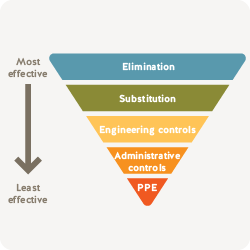 The effectiveness of controls in the workplace are often described in terms
of where they rank on the hierarchy
of controls. At the top of the hierarchy (most effective risk
control), we have elimination, followed by substitution, engineering
controls, and administrative controls and personal protective equipment
(PPE) at the lower end (least effective).
Carts, trolleys and other manual material handling equipment are generally
considered engineering controls as they reduce the physical demands to
transport loads over a distance. Well-designed MHE can reduce the forces
required to push and pull and make the task more optimal for the workers.
Before selecting MHE as a control, employers should determine if other
controls such as mechanized devices like conveyors or mechanical devices may
further reduce the physical requirements for handling loads.
 The workplace system
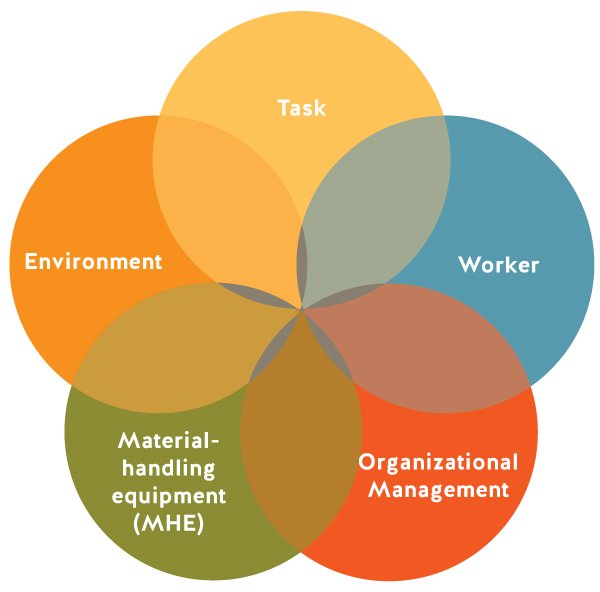
When selecting MHE, you should use a system’s approach to ensure safety,
productivity, and efficiency. This involves considering the interaction
between the five key elements of the workplace system: the equipment, the
task, the organizational management, the environment, and the worker.
|
Element
|
Considerations
|
|
Worker
|
Individual characteristics of person(s) performing the work (strength, stature, age, gender, experience, skill, mental and physical health)
|
|
Task
|
What the task requires (forces exerted, postures, duration, repetition, static versus dynamic movements, distance materials will be moved)
|
|
Material-handling equipment (MHE)
|
How MHE design meets task requirements (design and size of wheels, height and shape of handles, load capacity, cargo area size, stability, weight)
|
|
Organizational management
|
Organizing, planning, and facilitating (procurement, implementation process, maintenance, procedures, training, supplies, inventory)
|
|
Environment
|
Where the work takes place (indoor or outdoor, ramps, slope, terrain, workplace layout, manoeuverability)
|
Read the rest of the series
For a deeper dive, check out the rest of the articles in this series:
For more information
Visit worksafebc.com/ergonomics for more, or check out these other resources:
We’re here to help
If you have questions about ergonomics or human factors, please contact us at HumanFactors@worksafebc.com.
|